Since landing in Paris, I’ve noticed a strange infatuation with the director Quentin Tarantino. I’ve seen clothing with references to Tarantino films, and international friends have mentioned him as either a runner-up director or their favorite director. All of the streaming services here carry a ton of Tarantino movies. What makes Tarantino so popular here? To answer this, I started looking back through his films. In most of Tarantino’s interviews on his films, the French New Wave in cinema comes up. Tarantino, as a director and super nerd of film, loves French New Wave. At the 2016 Lumiere festival, Tarantino, during a speech, said, “Cinema is my religion, and France is the Vatican.”
Django: Unchained
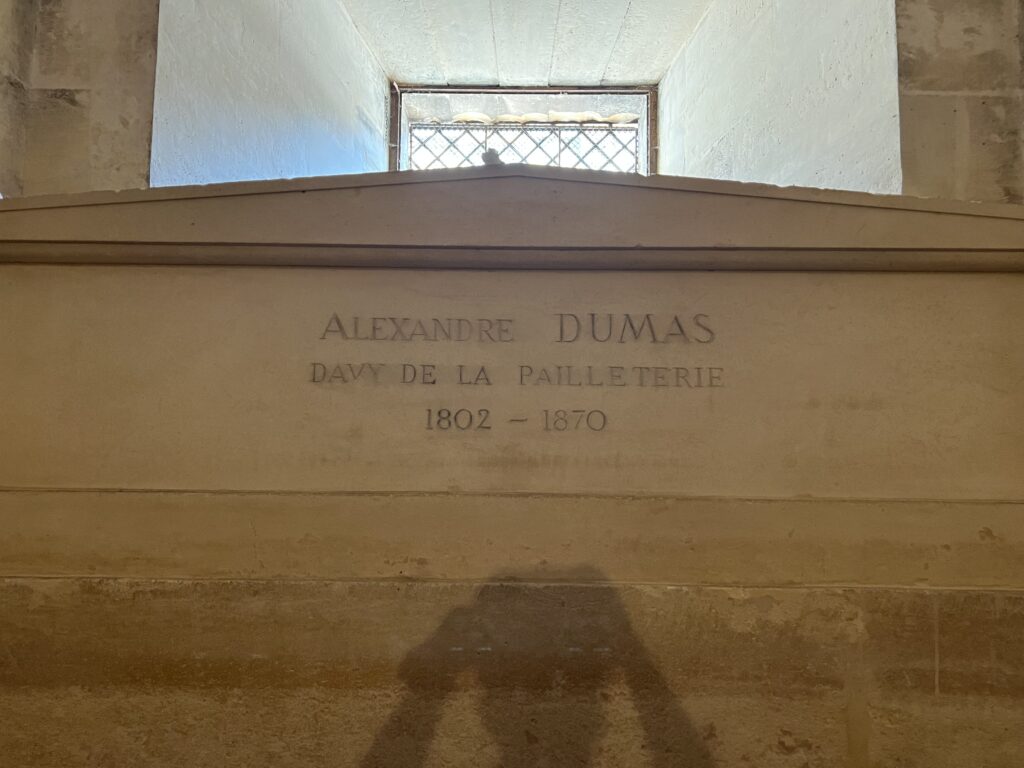
What I found fascinating about France and Tarantino was the direct references he made to French culture in his films. When I visited the Pantheon, the crypt below held Alexandre Dumas. I found the sight of his name carved in stone almost chilling within the context of Django Unchained. In the film, Dr. Shultz questions the plantation owner, Monsieur Candy, over his choice of naming one of his enslaved persons D’Artagnan. This follows a disturbing rant in which Monsieur Candy used eugenics to justify the treatment of enslaved persons, referencing genetic superiority. Shultz asks Candy about his thoughts on Alexandre Dumas, the writer he claims to take inspiration from. When Candy gives Dumas praise, Shultz informs him that Dumas was Black. This scene was so powerful as it revealed some of the hypocrisy and absurdity surrounding slavery and the great lengths those in power would go to to justify their cruel and evil actions.
Pulp Fiction:
I watched Pulp Fiction initially at a young age. The scene that’s always stuck with me was Vincent recalling his fast food across Paris with Jules. I found the quarter pounder line especially funny, not realizing that a Royale with cheese is actually what they call it in Paris. I appreciated this nod Tarantino made, not to mention the camera techniques he uses in his films modeled on French cinema.
Inglorious Bastards
You can’t mention Tarantino and France without bringing up Inglourious Bastards. The film, which takes place in both the French countryside and Paris, is an ode to the country. The shots of France are handled with such care. The theater in Paris that Shoshana works at captures the essence and grandeur of French cinema. What I find so interesting about the streets of Paris in film is the history and ability for film throughout the ages to preserve Paris behind the camera. Whether the film was made in 1950 or 2000, Paris retains its magic on the big screen.