Musée de l’Armée

When I heard we were going to this museum, the military history nerd side of myself was ecstatic. However, I didn’t realize just how impressive this museum would be, regarding the layout, timeline covered, and the geography of their collection. Starting the museum with medieval weaponry and armor was stunning to look at. The sheer amount of detail was almost unbelievable in some of these weapons and armor. In particular, the helmets were so amazing to look at. Seeing the sharp point of the Bascinet, such an iconic helmet. I also thoroughly enjoyed the wacky prototypes that never found real use, but were so odd they immediately caught my attention.
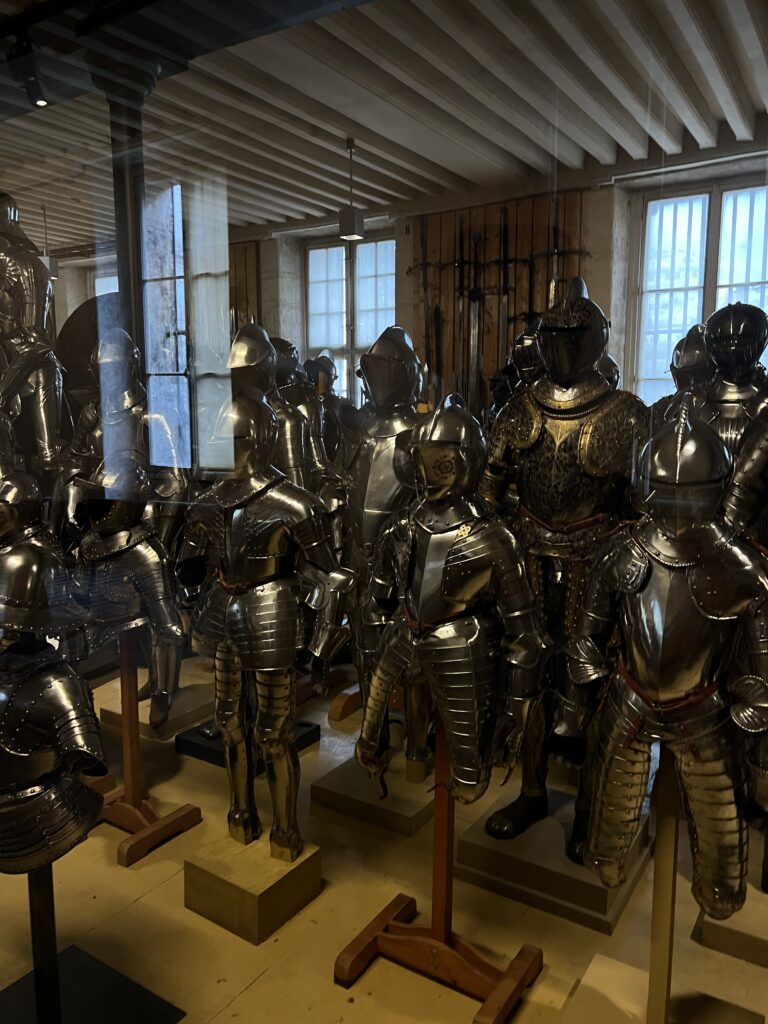
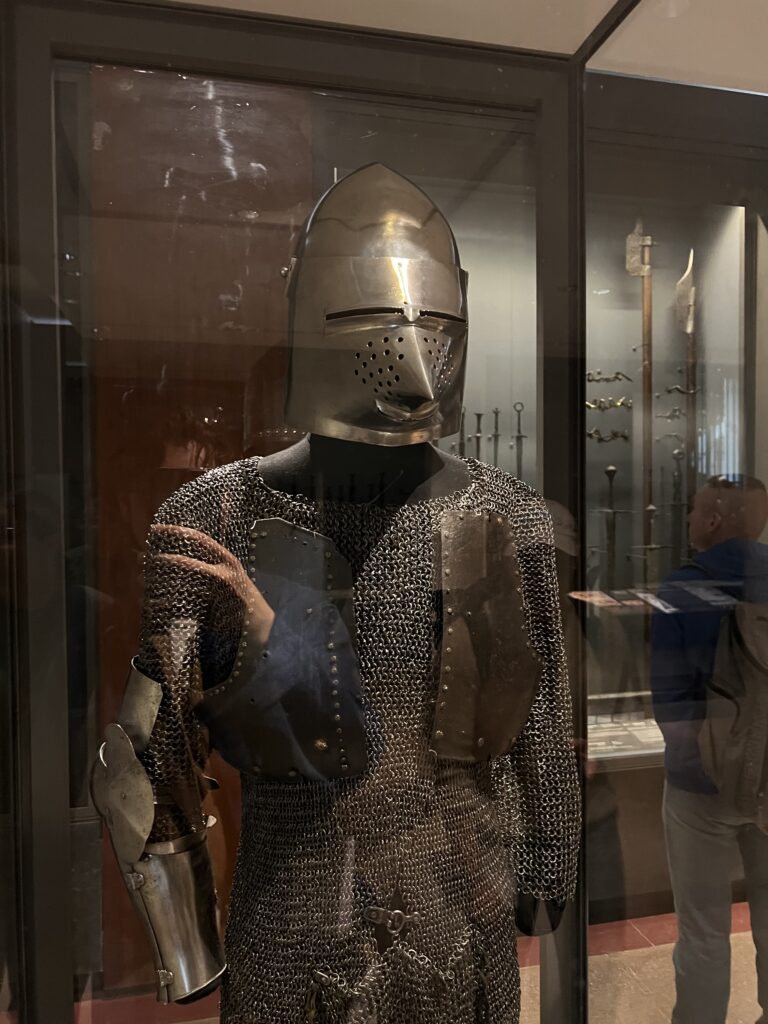
The most exciting exhibit initially during the tour was the years leading up to WW1. Witnessing the shift in real time of equipment becoming more modern and seeing the industrialisation of war was amazing. The uniforms of this period, especially the Franco-Prussian War, blew me away. I could see that globally uniforms were influencing each other, and there were many similarities between US and European uniforms.
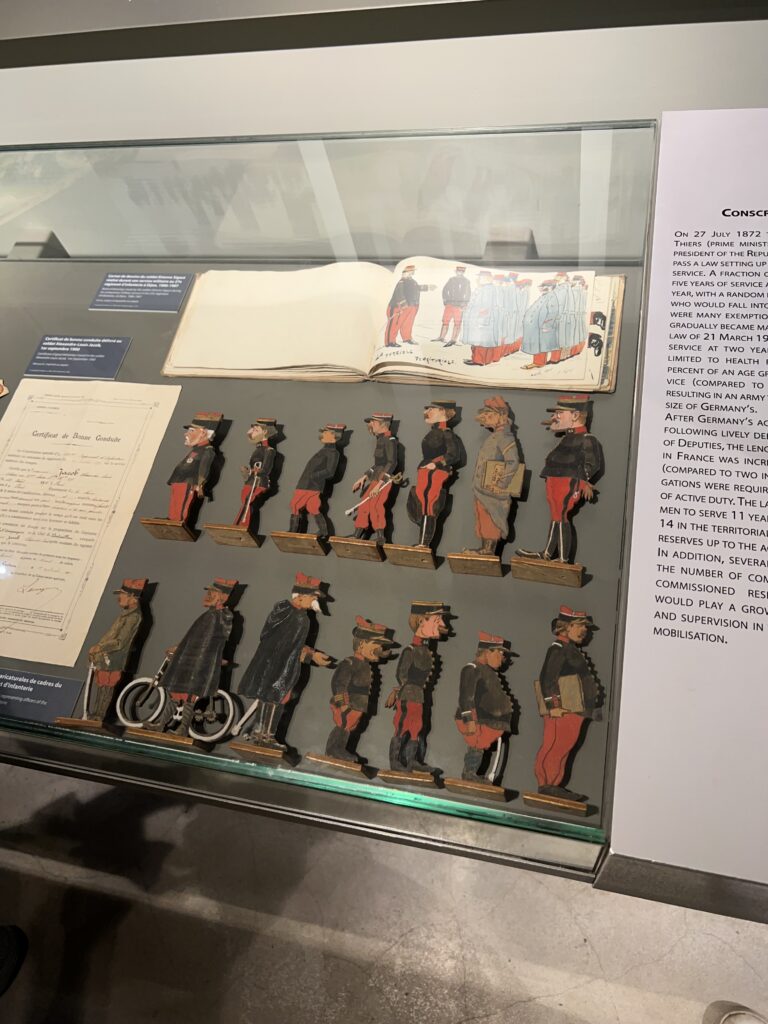
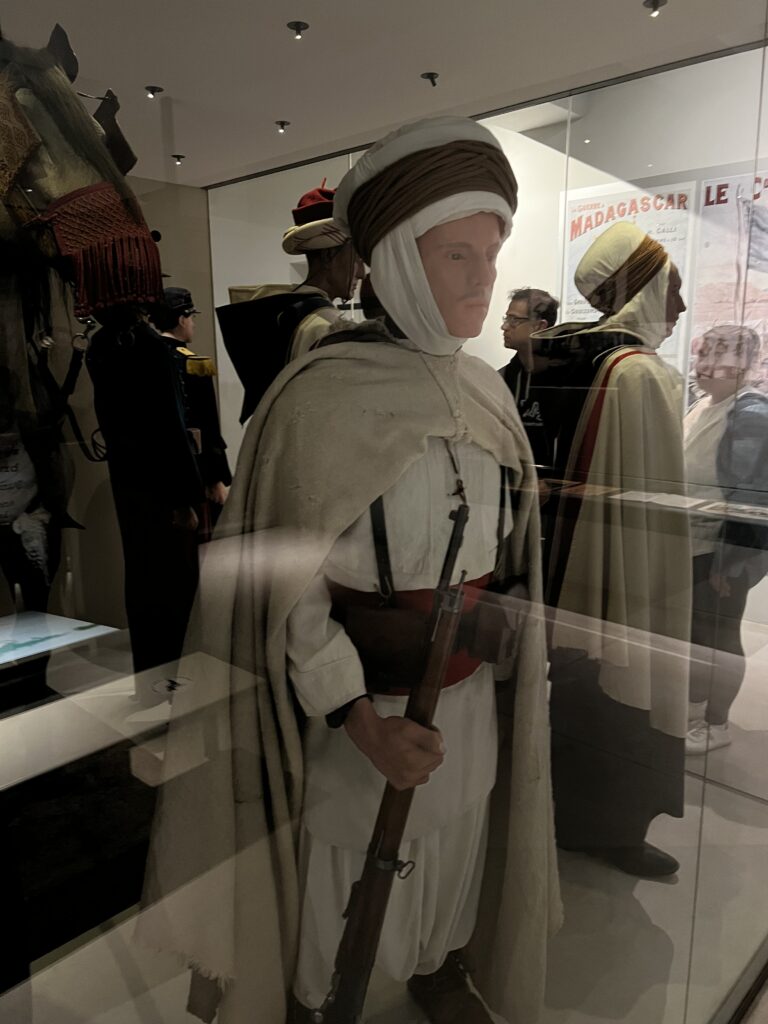
The different types of equipment for different occasions and campaigns amazed me. All the work that was put into these uniforms and the way the command would create adaptations for surplus based on needs was so cool.
By far, however, my favorite part of the museum was the exhibit on scale miniatures. The hobby has been a longstanding undertaking of mine since a very young age, and I found the historical presence of the miniatures spectacular to look at. There were so many details that it was hard to process. The room ranged in the history of miniature production.
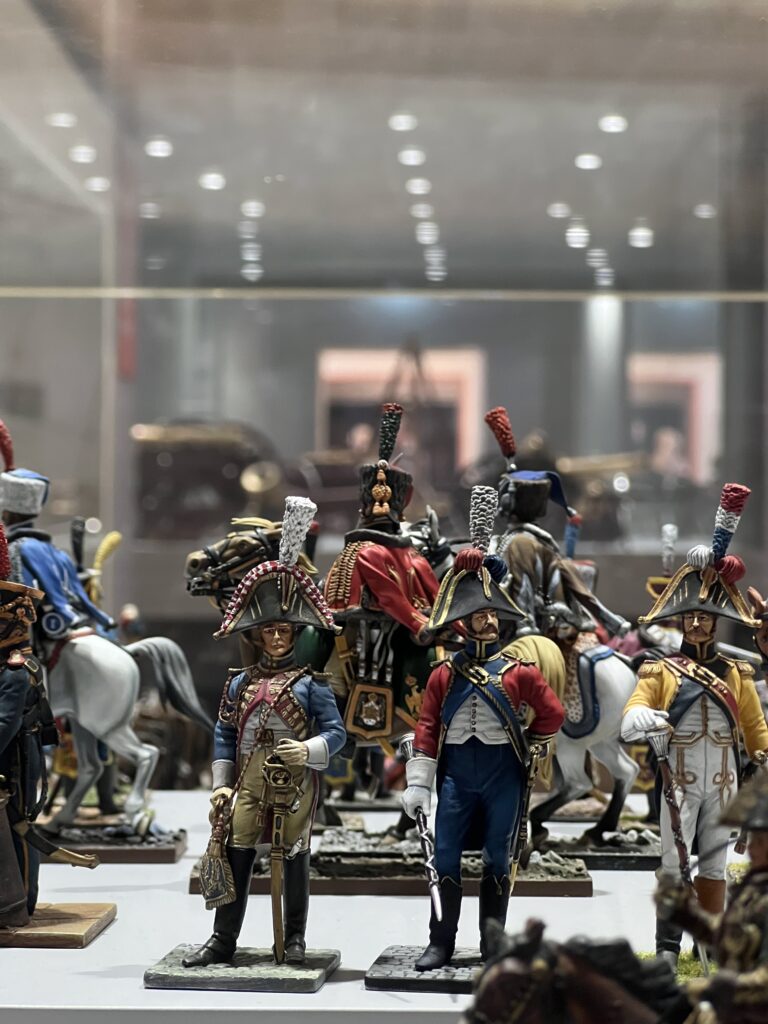
Surrounded by the rank and file of the armies was a sight to see. Every miniature had its story, held depth and emotion.
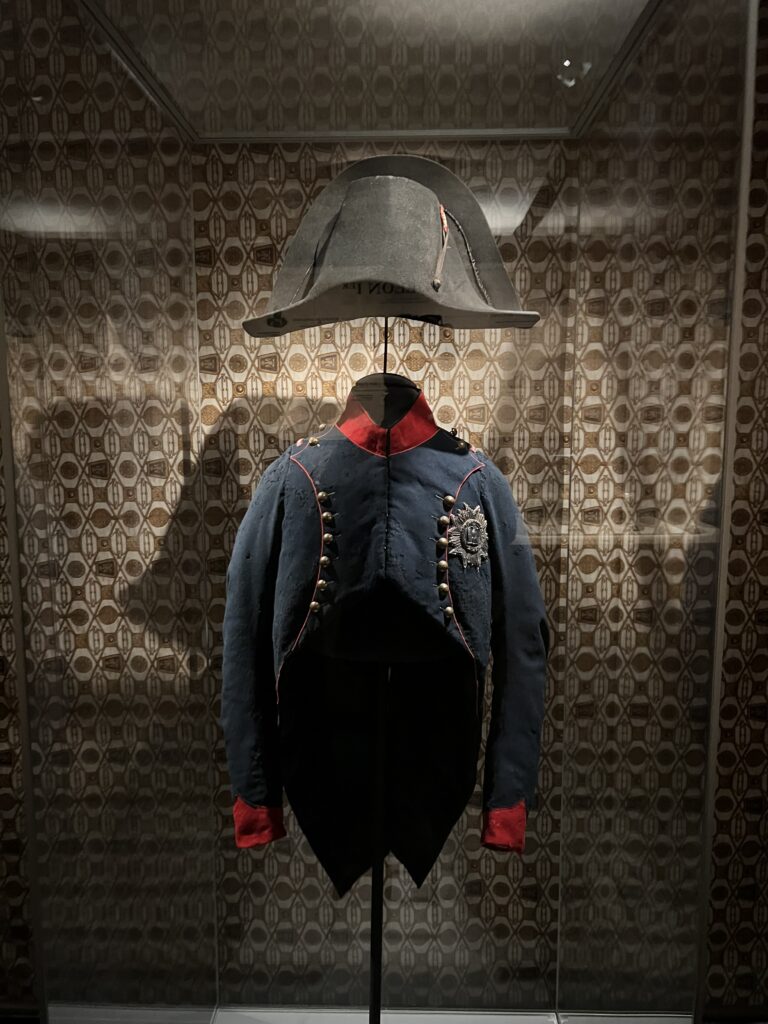
The range of history in the museum expresses the sheer amount of war France has faced as a country. The museum also illustrated the actors involved in orchestrating violence and the complicated history of France as a military power. Of the museums visited, I found the display of the exhibits and items the most captivating. The experience was mesmerizing and intimate.
Silencio: David Lynchs underground club

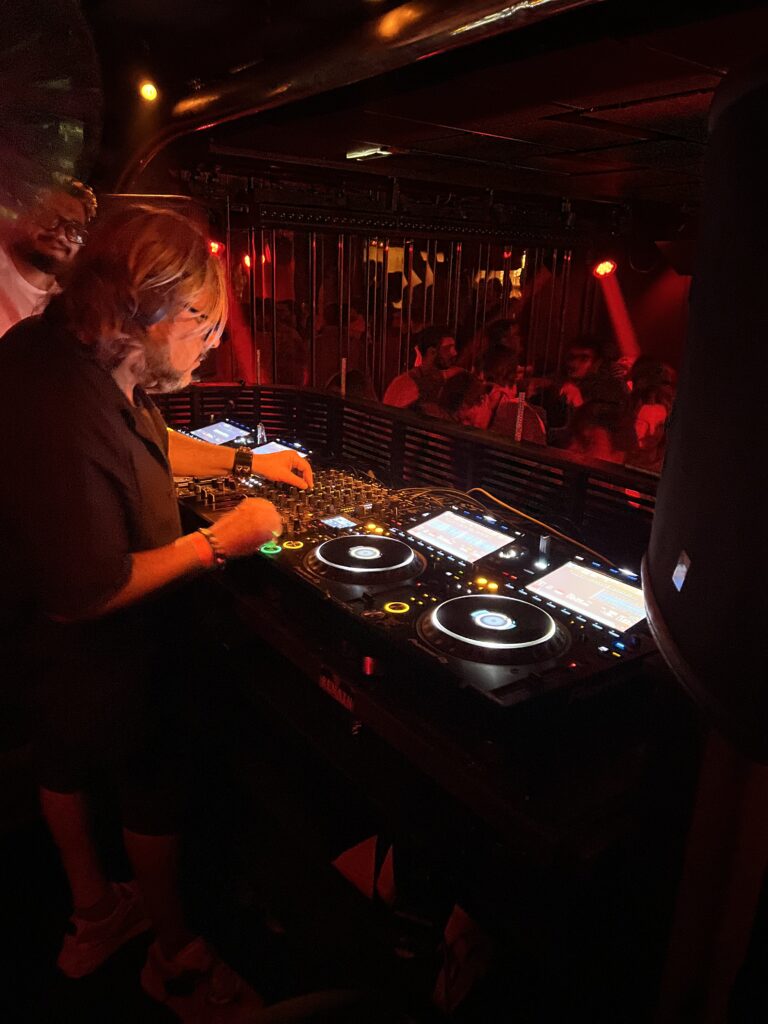
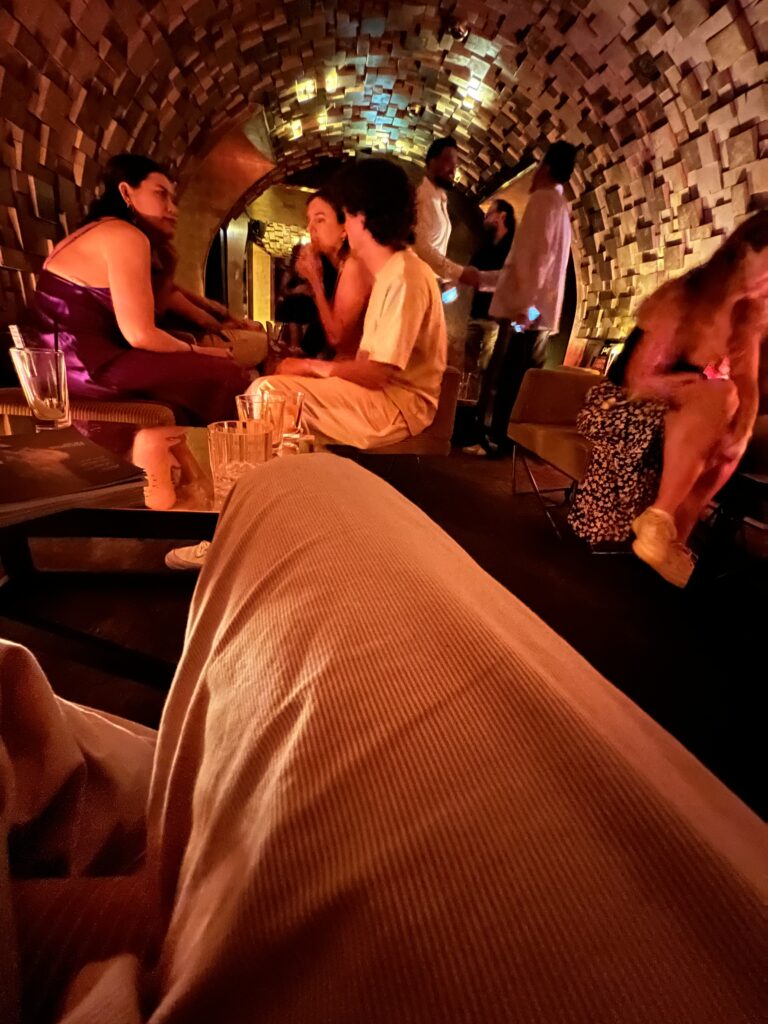
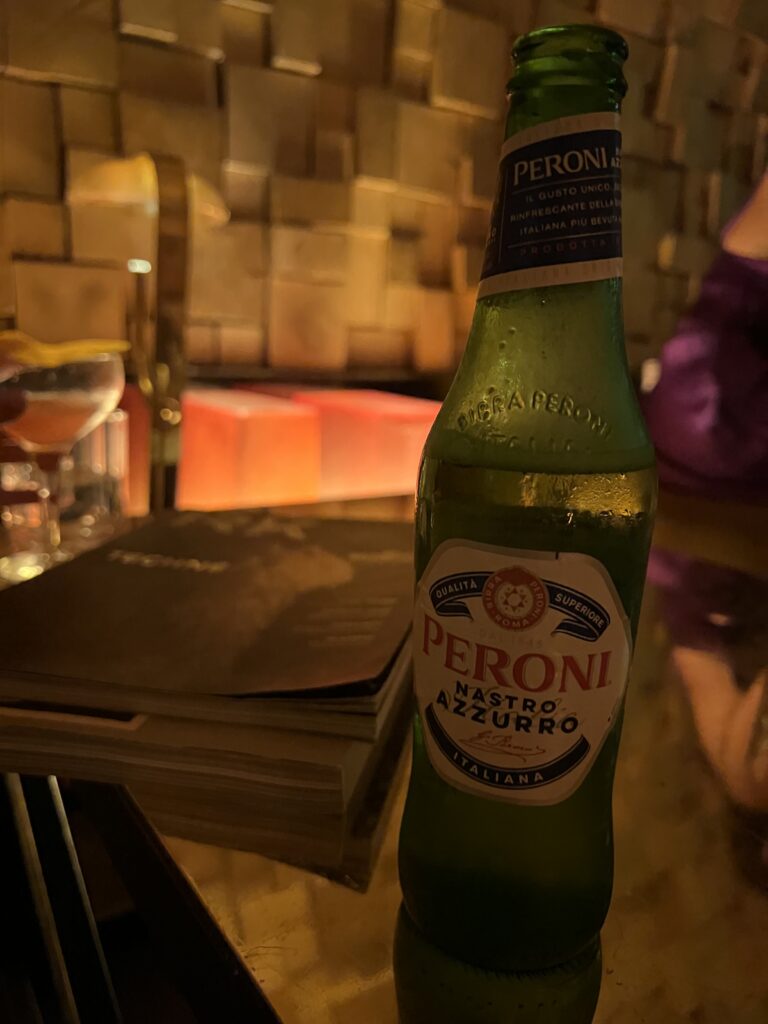
On Sunday the 13th of July, Avery and I tried our luck at Silencio, 15 euro all night entry tickets. The David Lynch lover in e was excited to see what such a space would look like. I was worried about the whole thing. The internet was a poor place to judge something, long lines, mean bouncers I heard. We got there quit early, a small door wating for us with three bouncers. We greeted one and he usherd us to the next with our tickets in hand to present. we got in, no long line, no mean bouncer. the entrance smelled like a stale theatre, cascading black carpeted stairs in front of us. as we walked down each flight the streets of paris washed away, soon faded in the thumping of a beat. the floor of the club had these intersecting corridors with dirrenet rooms, and bars serving 20 euro coctials and 10 euro beers. avery and I made our way to a lounge room, with spacey midcentury design and wooden blocks lining the walls, like somethingnyou would see in a 2001 Kubrick design, or more relevant a liminal space in a Lynch film. the walls were lined with art books free to pick up and look at.

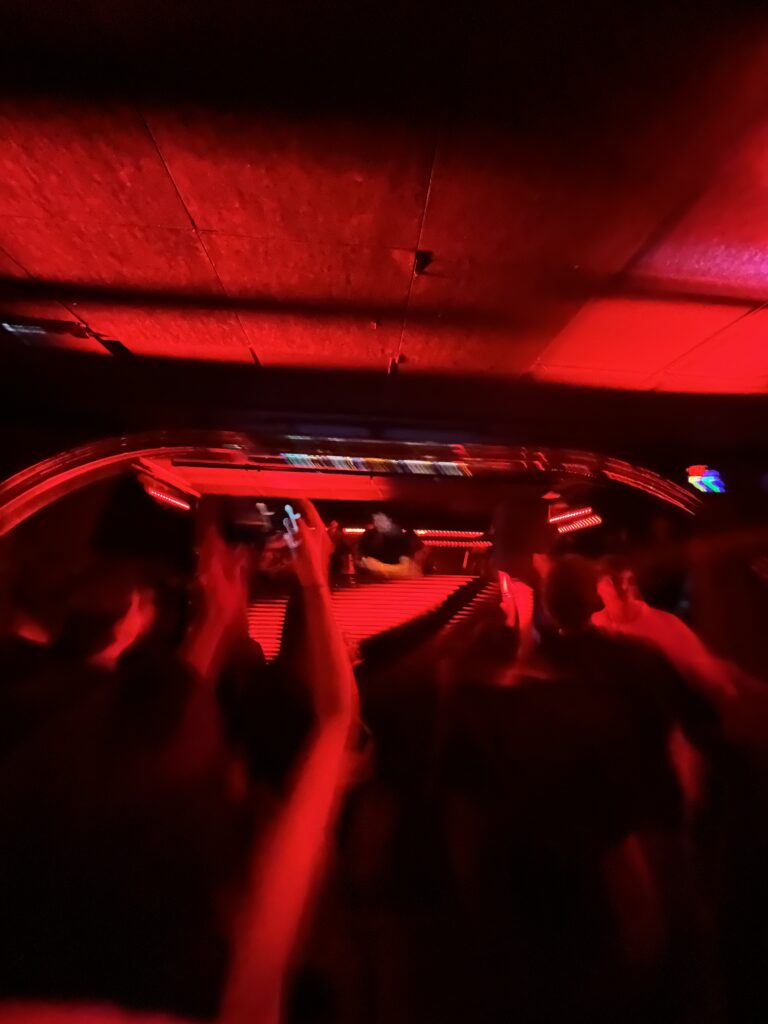
There was a designanted smoking room with these spindly trees growing up from the floor. the dance floor was small, lined with mirrors and flashing with red lights. it was both disorenting and cathartic. the sets for the night were arthouse, discoteqthe. melodic beats that thumped without end. it was 2 am, Avery and I were tired, and we parked oursleves in the lounge. A young man who we had spotted earlier that night with a white collard shirt opened a few buttons down, and black slacks approached us. He was enjpying the night, and the drinks it had seemed. His name was Jeremy, from the moment he sat dowmn in front of us he became our kindered spirit to lead our cleberation in the club. He wass interested in our story, and included us in the festivities. After he asked where our VIP bands were, like that was just a common thing he ran away only to comem back shortly with two VIP bands. He told us he used to work at Silencio, and so we presented our wrist to the bouncer and we went behind the DJ booth. Bottles on ice, people smoking, dancing and hyping the DJ. It was a wild night with wild people. eveyrone in the club was a character with a story, one that I may not know but certantly one to ponder on. Aveery and I stayed till 5am for the morning train. A night never to be forggoten.

France: the Muse to Tarentino

Since landing in Paris, I’ve noticed a strange infatuation with the director Quentin Tarantino. I’ve seen clothing with references to Tarantino films, and international friends have mentioned him as either a runner-up director or their favorite director. All of the streaming services here carry a ton of Tarantino movies. What makes Tarantino so popular here? To answer this, I started looking back through his films. In most of Tarantino’s interviews on his films, the French New Wave in cinema comes up. Tarantino, as a director and super nerd of film, loves French New Wave. At the 2016 Lumiere festival, Tarantino, during a speech, said, “Cinema is my religion, and France is the Vatican.”

Django: Unchained

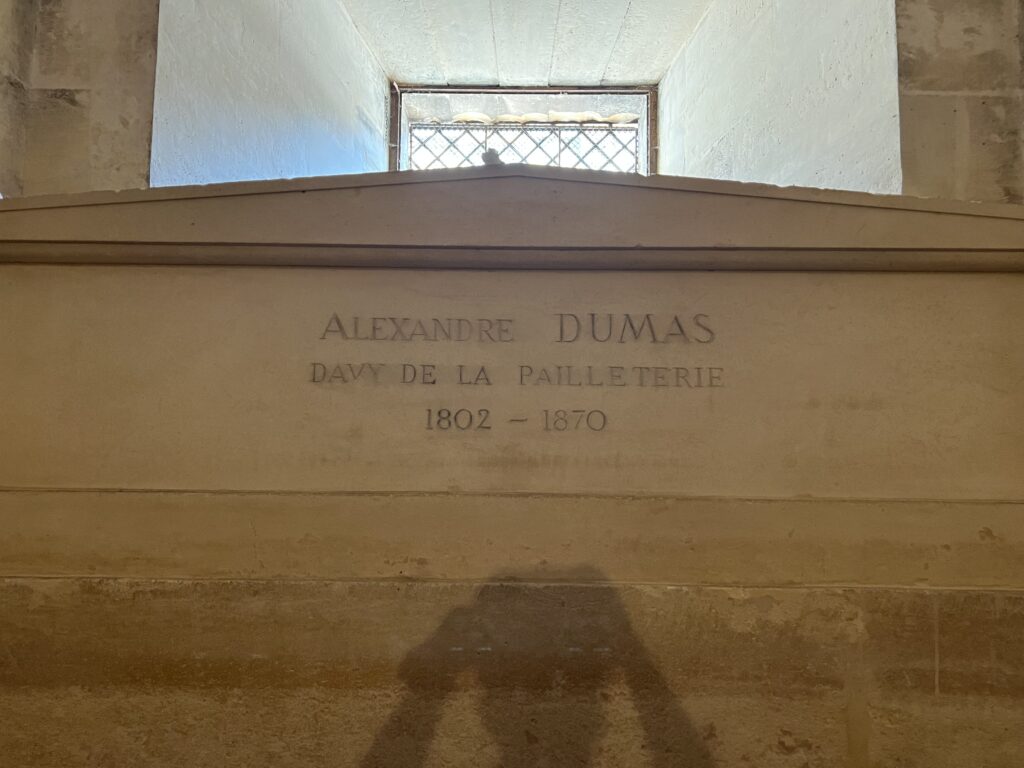
What I found fascinating about France and Tarantino was the direct references he made to French culture in his films. When I visited the Pantheon, the crypt below held Alexandre Dumas. I found the sight of his name carved in stone almost chilling within the context of Django Unchained. In the film, Dr. Shultz questions the plantation owner, Monsieur Candy, over his choice of naming one of his enslaved persons D’Artagnan. This follows a disturbing rant in which Monsieur Candy used eugenics to justify the treatment of enslaved persons, referencing genetic superiority. Shultz asks Candy about his thoughts on Alexandre Dumas, the writer he claims to take inspiration from. When Candy gives Dumas praise, Shultz informs him that Dumas was Black. This scene was so powerful as it revealed some of the hypocrisy and absurdity surrounding slavery and the great lengths those in power would go to to justify their cruel and evil actions.

Pulp Fiction:

I watched Pulp Fiction initially at a young age. The scene that’s always stuck with me was Vincent recalling his fast food across Paris with Jules. I found the quarter pounder line especially funny, not realizing that a Royale with cheese is actually what they call it in Paris. I appreciated this nod Tarantino made, not to mention the camera techniques he uses in his films modeled on French cinema.

Inglorious Bastards

You can’t mention Tarantino and France without bringing up Inglourious Bastards. The film, which takes place in both the French countryside and Paris, is an ode to the country. The shots of France are handled with such care. The theater in Paris that Shoshana works at captures the essence and grandeur of French cinema. What I find so interesting about the streets of Paris in film is the history and ability for film throughout the ages to preserve Paris behind the camera. Whether the film was made in 1950 or 2000, Paris retains its magic on the big screen.

I am living in Paris

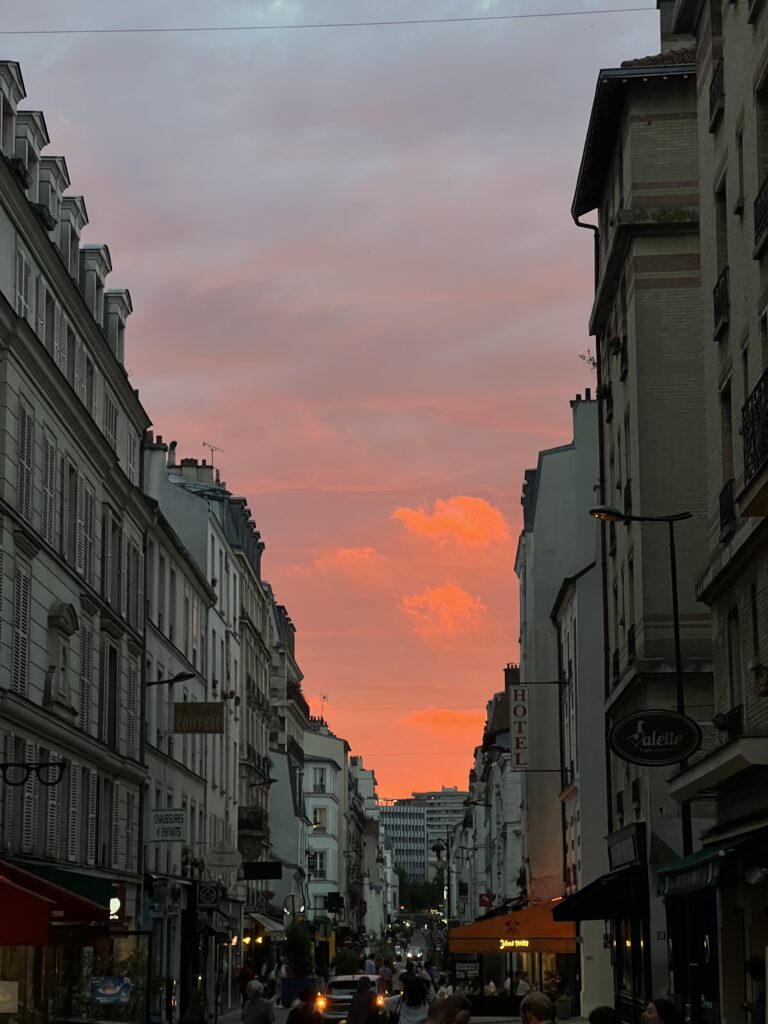
With Tuesday’s daybreak came the cool sensation of a breeze, a feeling that I had long taken for granted until I was met with the hottest days in Paris with no AC. Even better than the breeze, however, was the view of the sunset at the end of the cramped street I had just stepped out on. In that moment, the winding, aged street became more than newfound beauty; it felt like home. Stunned by the beautiful sky, the familiar feeling of peace washed over me. In a city across the ocean far away from my home and family, everything I had built for the past 21 years. I saw the same sky and the same sun washing over the horizon. I felt I had connected with a place I have never known. From this moment on I felt I had embraced Paris in its entirety; the two-day strain of a bucking horse had broken, and now I could learn to ride.

The iceless water became my thirst quencher, the new food was my sustenance, and the bustling metro became my bastion of transportation. The days filled with history lessons and growing friendships with those around me were only half of my journey. The evenings transformed the city. The drag of the day, those going to and fro work, exploring the city, and the tourists attempting to soothe their aching feet melted with the wilderness of night. Those who lived at the university became more than a repeated face. They adopted the role of my guide and companions in exploration, both of the mind and my surroundings. By my side, Avery was my trusted friend, someone I had grown up with in college, who was with me for this adventure. The two of us, taking in this new world we had yet to see. I walked the city with my newfound friends, taking in every inch of the stone below my feet. The Seine was a flowing river of culture, of libations and dance, of wafting smoke. The people around me parading the night like deities and venerable spirits in the mystical utopia of Paris. My night out on the town was comparable to that of Ewan McGregor in Moulin Rouge, swept up in the fervor of Bohemia. The rushing tides of the night would soon slow to a babbling brook, a chance for reflection and connection. The conversations I would have with the people whom I now considered my friends about politics, about the future, the overwhelming urge to reach out and embrace the world for all it has to offer. With every passing word, I further solidify my feelings to press on and fight the good fight.

Arriving in Paris

My flight to Charles De Gaulle was at 10:00 pm on Monday, June 30th. The flight, just the same as any other economy flight, was cramped and sterile with the addition of a flimsy blanket and a neck pillow. 7 hours and 40 minutes of disrupted sleep and a stiff neck. thoughts wandered my head, such as my game plan upon arrival, and the possibility that I would have no service in a country where the language made about as much sense to me as the trivial phrases I had heard in media. In addition, the many French films I had watched and the time spent cooking in the kitchen would make me a pro if the city of Paris only revolved around bullion, bouef, and Catherine Deneuve.

Arriving at the airport, I felt like a fast food toy spouting the same meaningless words, Where do I go, Where is my luggage, How do I get to campus? As my batteries faded, these thoughts became an unintelligible mess in my mind. Despite the daze, somehow I made it on the train. I had no idea how this worked. My knowlege of the DC metro shit the bed in the face of new transit. The weather was sweltering. I knew it was bad because every Parisian looked pained by the sauna that the city had become. I thought about the salvation of the campus.

The gates of the grand City Universitare beckoned me, drawing my eyes to the architecture that I had only dreamed of. Allas, I had no time to bask in the glory. The luggage was sluggish, my entire body was drenched in sweat, and according to the map, I had to drag the dinky rolling suitcases across cobblestone and sand only fit for a stagecoach. Once inside the Norway house, my new home for a month, I mentally collapsed, greeted by the faces from home, and the faces I would come to know.

Experiencing the first pilgrimage of our class opened my eyes to the wonder of the city. Every turn was something new. The cramped shops and eateries lining the streets called to you with sounds, sights, and smells. The aroma of heat and spice one door, the next the warmth of baked goods, all weaving seamlessly with city smells and cigarettes. The architecture of centuries past conversing with a modern city, the wild and chaotic symphony of revolution and tradition.